
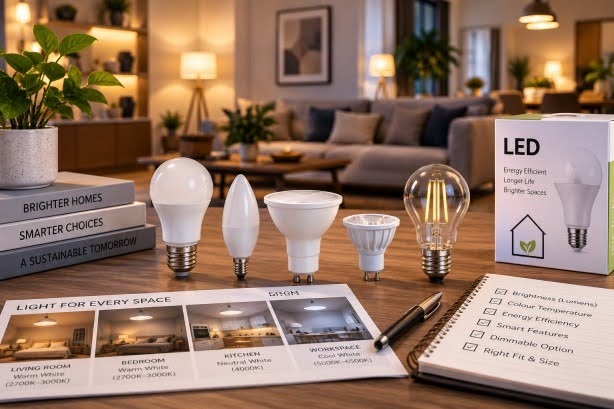
LED bulbs have established themselves as a favored choice for lighting in both homes and offices, thanks to their energy efficiency and long lifespan. As manufacturers broaden their offerings, consumers now have a wider range of options in terms of brightness, color temperature, bulb design, connectivity, and efficiency. However, selecting the appropriate LED bulb involves more than just comparing prices or brand names. It’s essential to consider factors such as the room, fixture, desired brightness, and type of lighting needed.
Brightness, which is measured in lumens, is a crucial specification to examine when choosing an LED bulb. Unlike traditional bulbs where wattage was a proxy for brightness, LED bulbs should be compared primarily based on lumen output. A bulb producing between 800 and 1,000 lumens is generally suitable for many general-purpose applications, although the ideal brightness can vary depending on room size and whether the bulb is used for ambient, task, or accent lighting. Additionally, it’s important to ensure compatibility with the fixture and adhere to its maximum wattage rating.
Color temperature, expressed in Kelvin (K), influences whether an LED bulb emits a warm or cool light. Bulbs in the 2700K to 3000K range typically create a warm, inviting light suitable for bedrooms, living rooms, and other areas designed for relaxation. In contrast, cooler lighting options around 4000K to 5000K are often better suited for kitchens, offices, and workshops where clearer task illumination is necessary. Combining different color temperatures within a home is also possible; for instance, using warm lighting in living areas while employing cooler lights for task-specific areas like desks.
Energy efficiency remains a primary motivator for switching from incandescent bulbs to LEDs, as they generally require significantly less electricity to produce similar levels of illumination and generate less heat. Actual savings are influenced by factors such as the bulb’s wattage, daily usage, electricity costs, and the type of lighting technology it replaces. Therefore, consumers are encouraged to compare rated wattage and expected operating life rather than relying solely on generalized savings claims. The lifespan of LED bulbs, though typically longer than incandescent ones, can vary based on heat management, electrical conditions, usage patterns, and product quality.
When it comes to purchasing LED bulbs, it’s important not to base decisions solely on brand or price. The expanding LED market offers a wide range of products at various price points, and a higher price does not necessarily mean better performance. Consumers should evaluate lumen output, wattage, color temperature, lifespan, color-rendering performance, dimmer compatibility, and fixture requirements. Independent testing and verified user reviews can offer insights into potential issues that may not be evident from packaging. Ultimately, the best LED bulb for any setting is one that aligns with the specific application, offering the desired brightness, appearance, efficiency, and reliability without unnecessary features or costs.
Legal Disclaimer: The information contained in this article has been provided by independent third-party contributors, clients, or content partners. We do not independently verify the accuracy, completeness, legality, ownership, licensing, or reliability of submitted content, including text, images, videos, trademarks, or other media materials. The submitting party is solely responsible for ensuring that all content, including images and media assets, complies with applicable copyright, trademark, licensing, and intellectual property laws. We disclaim liability for any unauthorized use of copyrighted or proprietary materials by third parties. If you believe that any content published on this platform infringes your intellectual property rights, kindly contact the author above for prompt review and resolution.