
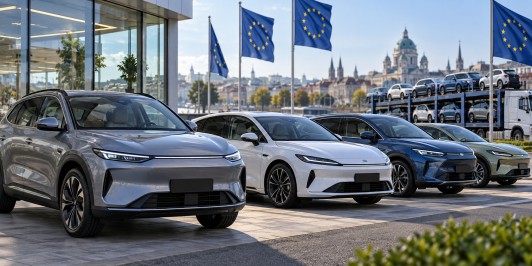
The surge in sales of Chinese-made hybrid vehicles in the European Union is intensifying competition for local car manufacturers, raising economic and regulatory concerns across the region. This growing presence has prompted the European Commission to urge China to self-regulate its exports of hybrid cars to the EU. Without a mutual agreement, the bloc might resort to implementing protective measures such as quotas.
In recent years, Chinese automakers have made significant inroads into the European market. Data reveals that sales of Chinese-produced fully hybrid vehicles jumped from a modest 659 units in 2022 to an impressive 160,662 in the first seven months of 2026. Similarly, the sales of Chinese plug-in hybrids saw a substantial increase, surging from 56,706 units in 2022 to 217,764 during the same period this year.
This expansion accelerated after the EU imposed anti-subsidy tariffs on Chinese electric vehicles in 2024. Notably, hybrid vehicles were not subject to these tariffs, providing an opportunity for Chinese manufacturers to expand their market share. As a result, companies like BYD, Chery, and Leapmotor have reported strong sales growth. Geely, the largest Chinese automotive group in the European market, sold approximately 205,000 vehicles by August 2026.
The prominence of hybrid vehicles in Europe is evident, as they now constitute nearly 37% of the car market, surpassing the 21% share held by fully electric vehicles. This shift comes as the EU grapples with a growing trade imbalance with China and seeks to safeguard the competitiveness of its domestic automotive industry.
Despite the influx of Chinese vehicles, European manufacturers continue to hold the largest share of the market. However, the rapid expansion of Chinese brands signals a pivotal shift that could reshape the competitive landscape. The EU’s call for China to limit exports highlights the growing urgency to address these economic challenges while balancing trade relations with one of its largest trading partners.