
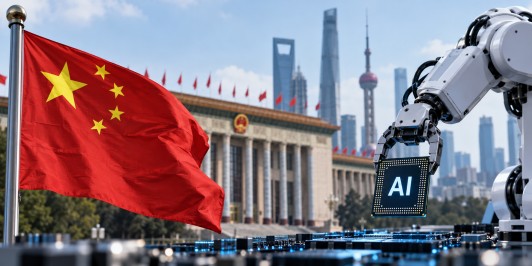
In response to growing concerns from the United States over its rapid advancements in artificial intelligence, China has firmly dismissed calls to curtail its AI industry. The Chinese government has characterized these calls as driven by fear and has cautioned that such restrictions could hinder global collaboration in developing the technology. China’s Foreign Ministry has emphasized the importance of international cooperation in AI development and governance, warning that confrontation and heightened competition could derail efforts to establish global regulations for AI.
While dismissing accusations that their AI progress poses a global threat, Chinese authorities have also acknowledged apprehensions about the swift development of increasingly sophisticated AI systems. China’s leadership maintains that artificial intelligence should remain under human oversight. Nevertheless, security officials in the country have expressed concerns about AI’s potential to facilitate large-scale information and propaganda operations, as well as cyber activities that could impact national and political security.
This ongoing debate underscores the escalating tensions between the United States and China over AI leadership, as both nations invest significantly in advanced AI technologies. Each country is simultaneously implementing strategies to safeguard national security and preserve technological superiority. The disagreement also mirrors a broader global discourse on the appropriate level of regulation for increasingly powerful AI systems. While some experts advocate for stricter safeguards and international collaboration, others fear that overly stringent restrictions may stifle innovation and exacerbate geopolitical divides.
Amid these discussions, Chinese authorities have voiced specific concerns regarding the potential misuse of advanced AI models, suggesting that these technologies could introduce new challenges for cybersecurity and information security. Meanwhile, China’s state media has criticized proposals aimed at slowing AI progress, contending that such measures could be part of a larger strategy to curb China’s ascent in the global tech arena.
As global leaders grapple with these complex issues, US and Chinese officials are anticipated to engage in talks concerning AI governance and other technology-related matters during a scheduled meeting later this month. These discussions will be critical in shaping future policies and cooperation between the two countries, potentially influencing the course of global AI development.