
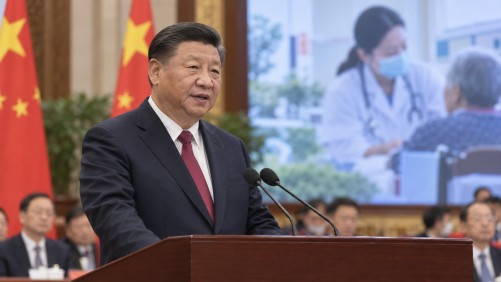
China is making strides in enhancing healthcare accessibility through its Healthy China Initiative, which aims to improve medical services for its vast population of over 1.4 billion. President Xi Jinping has emphasized the importance of channeling more medical resources to grassroots institutions, ensuring that communities, both urban and rural, have access to essential healthcare services.
Reforms under this initiative focus on several key areas, including hospital management, medical insurance, medicine supplies, healthcare supervision, and tiered medical services. The goal is to make sure that severe illnesses can be treated within provinces, more common ailments within cities or counties, and routine health issues at local medical facilities. This approach is part of a broader effort to ensure that more than 90 percent of residents can access medical services within 15 minutes, with primary-level institutions accounting for over half of the medical visits nationwide.
In response to growing healthcare needs, China has developed 125 national regional medical centers, particularly in central and western regions where advanced medical resources have been limited. The initiative also places a strong emphasis on preventive healthcare, notably for children and the elderly. Efforts such as addressing childhood myopia have successfully reduced the student myopia rate over five years, while the country’s life expectancy has increased to 79.25 years as of 2025.
China is advancing its healthcare strategy by promoting medical technology and pharmaceutical innovation. This includes encouraging digital healthcare, artificial intelligence applications, and the development of domestic medicines, vaccines, medical equipment, and diagnostic technologies. In the first half of 2026, China approved 38 innovative drugs, underscoring the country’s commitment to advancing medical research and development.
Traditional Chinese medicine continues to play a significant role in the healthcare system. China is modernizing and promoting international cooperation in this field through initiatives such as overseas medical teams and public health campaigns against infectious diseases.
Looking ahead, China aims to align its healthcare system with broader modernization goals by 2035. As the population ages and healthcare demands evolve, the government will face ongoing challenges in improving service quality, affordability, and access nationwide.