
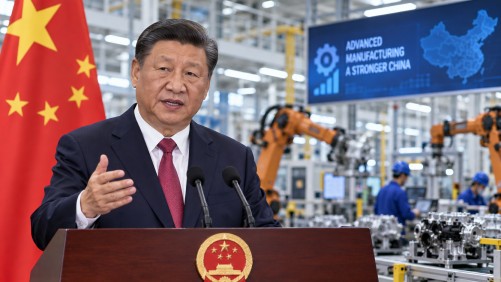
China is poised to dramatically bolster its advanced manufacturing sector, a move that could reshape the global industrial landscape by making the country’s economy more self-reliant and resilient. This initiative, put forth by President Xi Jinping, emphasizes the importance of developing high-quality and secure industrial systems as a cornerstone of China’s modernization and economic growth.
President Xi has called on Chinese authorities to focus on accelerating smart and green manufacturing processes while integrating these advancements into the broader industrial framework. A key aspect of this strategy is to strengthen domestic supply chains, thereby reducing vulnerability to external risks and enhancing China’s economic independence.
Premier Li Qiang further underscored the transformative potential of digital technologies and artificial intelligence within the manufacturing sector. He urged businesses to pursue digitalization and intelligent transformation, aiming to foster innovation and elevate high-end manufacturing capabilities. This push towards digital integration is seen as essential for maintaining China’s competitive edge on the global stage.
Li also highlighted the critical role of sustainable practices, advocating for green and low-carbon production methods. The integration of manufacturing with modern services is expected to create specialized advanced manufacturing clusters, driving efficiency and innovation across industries.
To support these ambitious goals, Chinese authorities plan to enhance industrial standards and fortify key supply chains. By addressing issues like excessive competition, the government aims to create a more stable environment that is conducive to the growth of advanced manufacturing. This comprehensive approach reflects China’s commitment to establishing a modern industrial system that can adapt to and thrive amidst global challenges.