
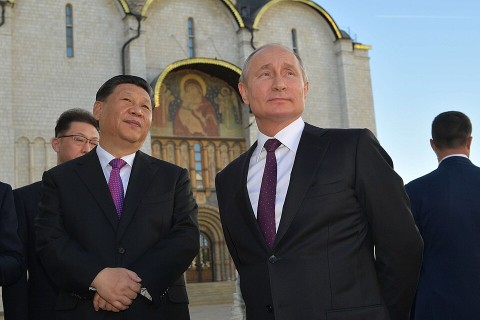
In a significant diplomatic engagement, Chinese President Xi Jinping and Russian President Vladimir Putin have exchanged congratulatory letters ahead of Putin’s visit to Beijing this week. This visit follows closely on the heels of former U.S. President Donald Trump’s recent summit in China. Xi highlighted the deepening and strengthening of Sino-Russian cooperation, as this year marks three decades of their strategic partnership. Putin is scheduled to arrive in China on Tuesday evening, with a meeting with Xi planned for Wednesday morning, according to Kremlin aide Yuri Ushakov. The leaders are expected to cover various aspects of their bilateral relations, including the Power of Siberia 2 gas pipeline proposal.
Analysts have noted the unusual timing of these visits, as it is rare in the post-cold war era for a nation to host U.S. and Russian leaders in such quick succession. The growing closeness between China and Russia has raised concerns in Western countries, especially after Russia’s full-scale invasion of Ukraine in 2022. China’s economic and diplomatic backing is seen as a factor sustaining the conflict, according to Western diplomats and analysts. Xi and Putin have met more than 40 times, far exceeding Xi’s meetings with Western leaders. Since 2022, bilateral trade between China and Russia has reached unprecedented levels, with China purchasing a significant portion of Russia’s exports, particularly crude oil, which has provided substantial revenue for Moscow amid the Ukraine conflict.
China has invested more than $367 billion in Russian fossil fuels since the onset of the war, as reported by the Centre for Research on Energy and Clean Air. These purchases have bolstered China’s energy security, particularly critical after the Middle East crisis disrupted oil shipments through the Strait of Hormuz. Despite the ongoing war in Ukraine and the strengthened Sino-Russian relationship, these issues did not prominently feature in Trump’s discussions with Xi last week. Instead, the U.S.-China talks concentrated on trade, the situation in Taiwan, and the Middle East conflict, with Trump mentioning an agreement with China on the importance of reopening the Strait of Hormuz.
During the discussions, Xi emphasized the Taiwan issue, cautioning Trump about the risks of mishandling the matter. Trump left China without deciding on a substantial arms deal with Taiwan, a decision that could be favorable for Beijing, which aims to assert control over the self-governing island, although most Taiwanese oppose this. Joseph Webster, a senior fellow at the Atlantic Council, speculated that Taiwan might be an underlying theme in the Xi-Putin meeting. He suggested that Beijing might seek further fossil fuel agreements with Moscow to secure energy supplies in case of a future conflict. Expanding Russia’s oil pipeline capacity to China, such as through the Power of Siberia 2, could significantly enhance Beijing’s energy security in a potential Taiwan crisis.