
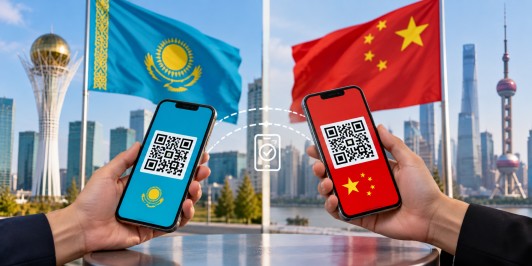
Kazakhstan is set to introduce cross-border QR-code payment systems with China by the end of 2026, aiming to facilitate mobile transactions for travelers between the two nations. This initiative marks a significant step in enhancing financial cooperation between the countries, allowing citizens to make seamless mobile payments during their travels. The National Bank of Kazakhstan announced that preparations are underway to establish similar payment service frameworks with 11 other countries, including India, the United Arab Emirates, Kyrgyzstan, and Uzbekistan, with further expansions anticipated from mid-2027.
The collaboration with China could extend the application of the yuan beyond its conventional roles in trade and investment, integrating it into everyday consumer transactions. This move is indicative of the expanding financial ties between China and Central Asian nations as part of the Belt and Road Initiative. Kazakhstan’s strategy builds on existing collaboration with China, exemplified by the 2024 partnership between Kazakhstan’s Kaspi.kz and Alipay, which enabled Kaspi users to conduct mobile payments within China.
China’s efforts to promote the yuan’s international usage are part of a broader strategy to enhance cross-border payment systems and lessen reliance on the US dollar. By expanding the digital yuan and QR-based payment mechanisms, Beijing is fostering stronger financial integration across borders. The Kazakhstan-China payment system initiative is poised to bolster regional connectivity and encourage the adoption of yuan-based payment systems throughout Central Asia.
This development underscores a growing trend of financial innovation and cooperation in the region, leveraging technology to facilitate easier and more efficient transactions. As these new systems come into play, they are expected to not only streamline consumer experiences but also reinforce economic partnerships between participating countries. The collaboration could serve as a model for similar initiatives, fostering a more interconnected economic landscape across Central Asia and beyond.