
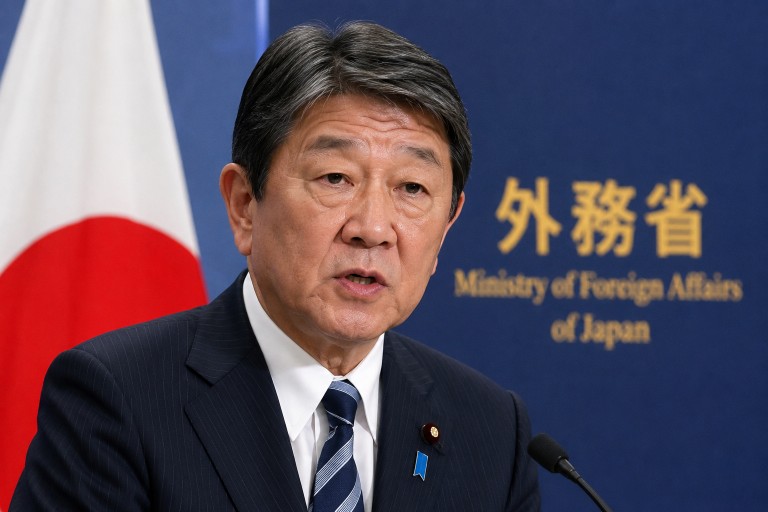
Japan has cautiously initiated efforts to ease diplomatic tensions, as evidenced by recent interactions involving Foreign Minister Toshimitsu Motegi and his counterparts from China and Russia during the ASEAN summit in Manila. In what was described as an informal exchange, Motegi briefly conversed with Chinese Foreign Minister Wang Yi. He emphasized the significance of maintaining dialogue to ensure regional peace, though China later refuted claims of any meeting or planned contact.
Additionally, Motegi confirmed a short discussion with Russian Foreign Minister Sergey Lavrov. This conversation marked the first recorded interaction between the two nations’ top diplomats since Russia’s 2022 invasion of Ukraine. The dialogue focused on bilateral relations and regional issues, hinting at a potential thaw in diplomatic relations while both parties navigate complex geopolitical landscapes.
Despite these diplomatic engagements, Japan has maintained a firm stance in its support for Ukraine and continues to uphold sanctions against Russia. This unwavering position underscores Japan’s commitment to its international obligations, even as it explores avenues for dialogue and cooperation with China and Russia.
Analysts have noted the importance of maintaining communication channels to address bilateral issues effectively. However, they caution that Japan must balance its engagement strategy carefully to avoid compromising its international commitments or appearing to undermine its stance on critical global issues.
The recent interactions at the ASEAN summit highlight Japan’s delicate diplomatic maneuvering as it seeks to foster dialogue in a region marked by tension. While these exchanges represent a cautious step forward, the broader implications for regional stability and Japan’s foreign policy remain to be seen.