
The extension of the Busan agreement between the United States and China will temporarily ease trade tensions, keeping a truce in place until January 10. This development provides both nations with a critical window to negotiate longer-term solutions amid ongoing economic and strategic challenges.
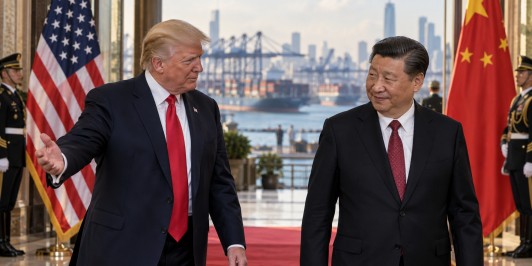
The announcement coincides with Chinese President Xi Jinping’s state visit to Washington, where he was greeted with an elaborate ceremony at Joint Base Andrews by U.S. President Donald Trump and First Lady Melania Trump. The reception, which included military honors and a flyover by U.S. B-1 bombers, underscores the importance of Xi’s visit as both countries strive to manage bilateral relations.
During Xi’s two-day visit, trade issues are expected to dominate discussions, alongside topics such as artificial intelligence and technology. The state visit is set to include a formal welcome at the White House and meetings with President Trump and other officials, aimed at addressing economic differences while reinforcing diplomatic dialogue.
The U.S. Treasury Secretary Scott Bessent’s announcement of the Busan agreement extension highlights a temporary alignment as Washington and Beijing navigate their complex relationship. As the world’s largest economies, both nations are keen to avoid escalating trade conflicts that could have global repercussions.
Beyond trade, the visit is also significant in the context of the competitive race for technological supremacy, particularly in artificial intelligence. As both countries seek to bolster their positions in this critical sector, the state visit provides a platform for exploring cooperative opportunities and managing competitive tensions.